
Eva breathed in the air of Beulah, savoring the fragrance of cinnamon and countless other sweet scents she couldn’t name.
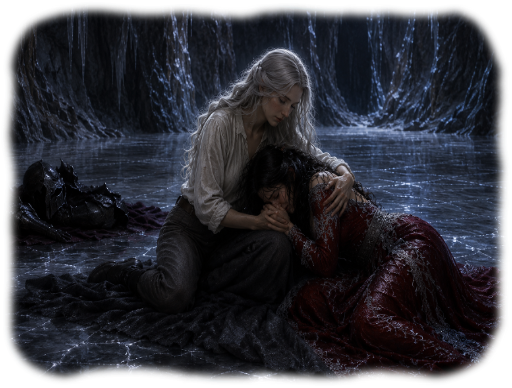
No one had been willing to speak of Perry’s sacrifice until she finally coaxed the truth from Talus. She was to remain in Beulah until the King summoned her across the River of Death. Only by keeping his mortal form could Perry return with her.
“He didn’t even hesitate,” Talus had confided.
Bells rang out, and trumpets sounded in continuous, melodious welcome as Pilgrims arrived.
Shining Ones walked among them, bearing the King’s summons and guiding each Pilgrim to the River.
Gates opened from gardens, vineyards, and orchards onto the King’s Highway. A gardener beckoned them inside to eat of the fruit.
There would be plenty of time for that… later.
Water as clear as crystal cascaded from the mountains into a sparkling stream. Its source was the Throne, and it flowed through the Delectable Mountains, all the way to the Stately Palace in the ravine behind the Interpreter’s House.
Talus had excitedly told her that it even flowed behind the Valley of the Shadow of Death, where the fruit he had once dared not eat grew on saplings among the clefts of the rock.
The Prince had built a cottage for them along its banks with His own hands. It was everything she had ever wanted. Everything she had ever dreamed of.
She was no longer the silly girl who had written her own name on the unsigned deed in Carnal Policy just to see how it looked. Nor was she the jaded woman who wore masks and threw parties in the City of Destruction.
She was simply Eva Greycloak. It had all begun with Perry’s fumbled words: “I’m your faithful slave.” She giggled.
“Beloved,” she said. “I am lovesick.”
He swept her into his arms, nudged the door open with his boot, and carried her over the threshold.
“Oh, Perry, you romantic!”
She lifted her chin to kiss him, but he whispered something in her ear. Heat rushed to her face, and her pulse quickened.
“Yes, dearest,” she said sweetly. “But only until the sun goes down.” The poor dear looked utterly crestfallen. “It’s a good thing the sun never goes down here!”
***
And that, my dear Readers, is where I lay down my pen and leave our beloved Eva and Perry to their privacy. Of their life there is little left to say, save that they lived happily ever after in Beulah, always at each other’s side.
–
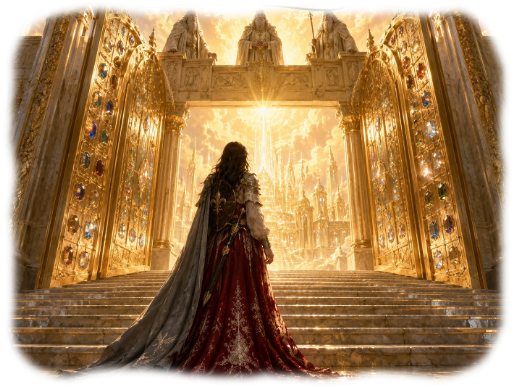
When at last Eva’s hair had turned to silver, she was summoned to the Celestial City, and Perry crossed the River of Death with her, her hand firmly in his. Together they stand in the presence of the King, with no shadow of parting ever again to mar their happiness.
I may yet pick up my pen again to write of the valiant deeds of their son, surpassing even those of Great-Heart himself. Or of the unsurpassed beauty and wisdom of their daughter.
But for now, I rest beside the River of Life with my Beautiful and pray that my own ending will be as brave as theirs.
– SEEKER